



Three pages before coffee, or five lines before sleep. Both practices live in the same notebook aisle, both take minutes rather than hours, and both are usually recommended in the same breath as better sleep and clearer thinking. They are not, however, doing the same job.
Morning pages are a clearing exercise. Gratitude journaling is an attention exercise. One asks you to dump everything out; the other asks you to pick through the pile and keep what glitters. Choosing between them comes down to what you need this month — and what you can genuinely keep up on a wet Tuesday in February. Here is how they compare.
Morning pages, plainly explained
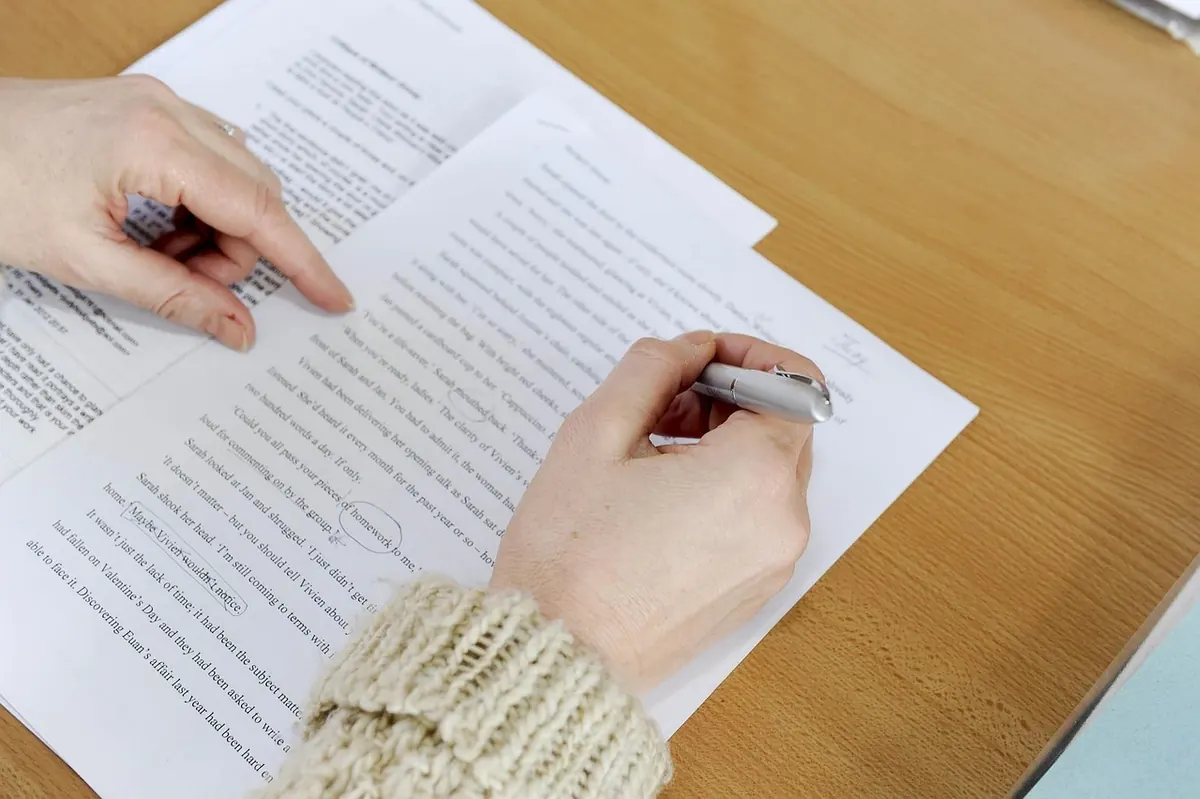
Morning pages come from Julia Cameron's The Artist's Way, and the instructions are deliberately uncompromising. Three pages, written by hand, first thing, before you look at your phone or decide what the day needs from you. Stream of consciousness, no editing, no shaping, nobody reading.
If nothing arrives, you write that nothing has arrived. You write it until something else does. The pages are not meant to be good. They are meant to get the static out of your head and onto paper, so the rest of the day starts on a cleaner surface.
The rules most people keep
- Longhand, not typing — the slowness is part of it.
- Three pages, or roughly twenty minutes, whichever finishes first.
- No rereading straight away. Give it weeks before you look back.
- No skipping the boring days. Especially those.
Gratitude journaling, plainly explained
Gratitude journaling is shorter and often more forgiving. Three to five entries, once a day, often at night. Detail is what gives it weight: "my friend" is thin, while "the message from Sam that landed just as I was feeling low" has a pulse. A sentence on why it mattered makes it stickier still.
There is a weekly version too, where you sit down for fifteen minutes on a Sunday and review the week. Some people find that easier to sustain than a daily habit, and it catches things a rushed evening list would miss.
Aims compared: emptying versus noticing
These two practices work on opposite ends of the same problem — a mind that has become noisy but not especially observant.
- Morning pages are about output. They give anxious loops, half-finished arguments and unspoken worries somewhere to go.
- Gratitude journaling is about input. It directs your attention towards what is already working, which is usually quieter than what isn't.
- Morning pages often surface decisions you have been avoiding.
- Gratitude journaling tends to soften the tone of the day rather than change its contents.
Time, rhythm and honest effort
Morning pages take real time. Twenty to thirty minutes, plus the hand cramp if you are not used to writing longhand. They also demand a certain ruthlessness: you have to start them before the day starts, or they become afternoon pages and quietly stop happening.
Gratitude journaling fits almost anywhere. Five to ten minutes at the kitchen table, on the train, or in bed with the light still on. A notes app counts, though many people find handwriting slows them down enough to be honest.
The fair test is not which practice sounds more appealing. It is which one survives a busy week, a bad night's sleep and a house full of other people's demands.
What each one tends to deliver
People who keep up morning pages often describe a mental unclogging — fewer thoughts circling, more sense of what they actually think about a situation. It is also useful raw material. Fragments written at seven in the morning have a habit of turning into essays, emails and decisions later.
Gratitude journaling is quieter. Regular writers report noticing small good things more readily, and a slightly better sense of proportion when something goes wrong. It is a useful counterweight to the way attention naturally drifts towards problems.
Neither is a treatment. If you are struggling with your mental health, a notebook is a decent companion but not a substitute for proper support from a GP or a qualified professional.
Prompts to get you started
For morning pages, when you freeze
- What am I avoiding today, and what would it cost me to do it?
- What is actually bothering me, underneath the thing I keep complaining about?
- What did I notice yesterday that I did not say out loud?
- If today went well, what would have happened?
- What am I pretending not to know?
For gratitude journaling, when the list feels thin
- Something small that worked properly today.
- A person I spoke to, and what they did well.
- Something I have that I would miss if it vanished.
- A moment I would happily live again.
- Something difficult that taught me a usable lesson.
Which practice suits you?
If your head is full before your feet hit the floor — plans, worries, unfinished conversations — morning pages will probably help more. They are a bigger lever, and they ask more of you.
If your days are fine but blurred, if you finish the week unable to remember much of it, gratitude journaling is the gentler correction. It is also the realistic choice when your mornings belong to children, commutes or a job that starts early.
A rough rule: choose one, not both. Gratitude journaling is easier to maintain. Morning pages are more likely to shift something. You can always swap after a fortnight.
A two-week experiment
Try this rather than deciding from the sofa. Week one: gratitude journaling, five minutes before bed, three specific entries a night. Week two: morning pages, three pages or fifteen minutes, whichever comes first, written before you check your phone.
At the end of each week, note four things: how you slept, how your mood sat, what you noticed, and whether you skipped days. Skipping is data, not failure.
Then keep the one you missed when it was gone. Adjust the rules if you need to — two pages instead of three, a Sunday review instead of a nightly list. A journal is a tool, not a contract, and the version you actually do is worth more than the version you meant to do.
Photo: George Milton / Pexels